


Full article
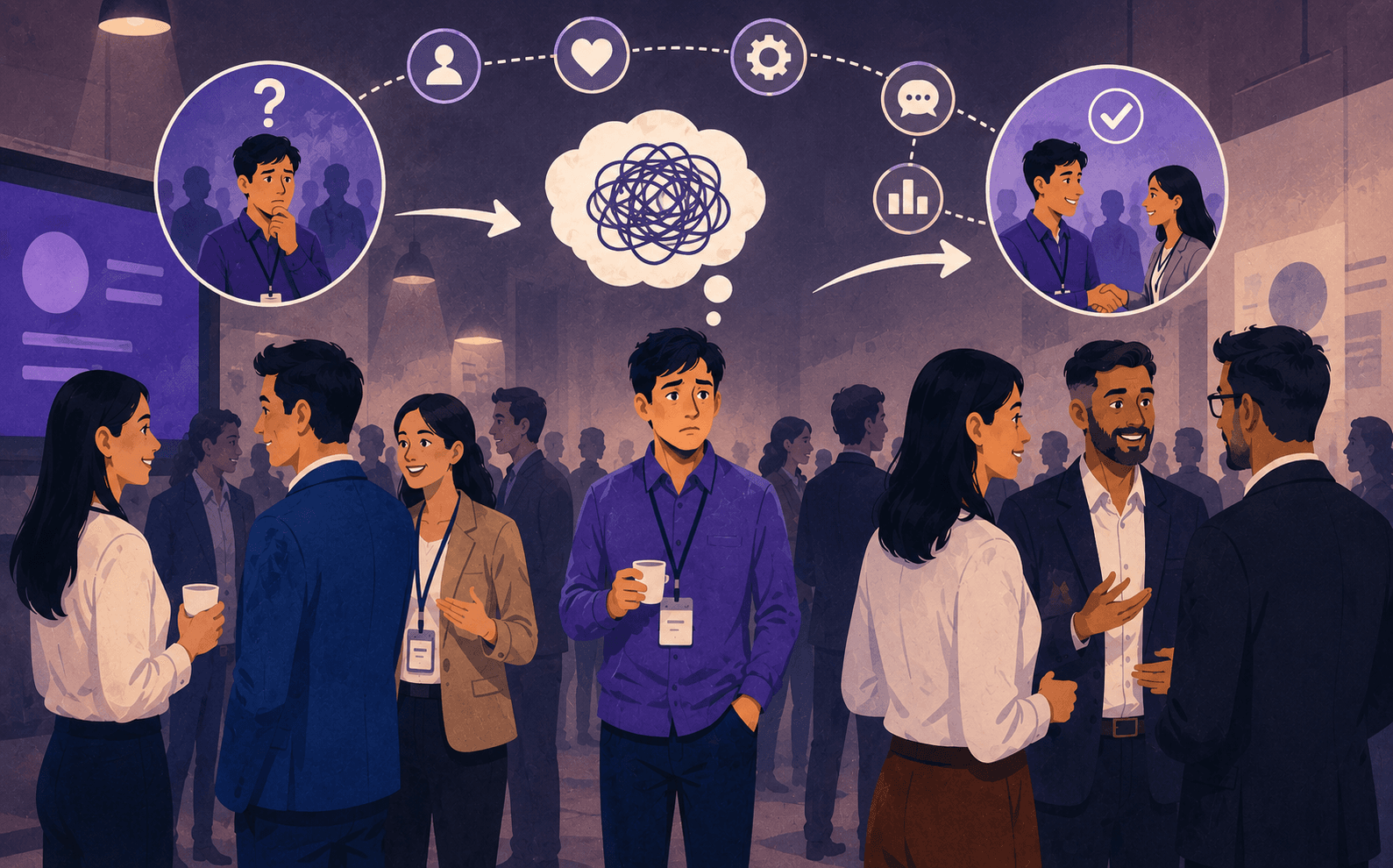
Picture this: You just registered for a seminar you've been excited about for weeks. The speakers are great, the agenda looks promising, and you've already bookmarked three sessions you want to attend. But then the networking session begins - and suddenly, the excitement drains away. You're standing in a room full of strangers, watching people talk in closed circles, wondering who to approach and how. The longer you wait, the harder it gets.
Sound familiar? You're not alone.
The Problem with How We Network
Traditional event networking is essentially blind. You walk up to someone, exchange pleasantries for ten minutes, and discover you have nothing in common. You repeat this three or four times. You go home with a handful of business cards you'll never follow up on, and a quiet frustration that the "networking" part of the event was a complete waste of time. The perfect business partner or collaborator might have been sitting two tables away - and you never found out.
This is not just an introvert problem, although introverts do carry the weight of it harder. For someone who already finds it difficult to approach strangers, traditional networking isn't just inefficient - it's exhausting. You spend most of your mental energy managing the social anxiety of cold-approaching people, leaving very little room for actual meaningful conversation. Small talk feels forced. The constant fear of interrupting someone or being brushed off makes the whole experience feel more like an obstacle course than an opportunity.
The real missed opportunity isn't a lack of willingness. It's a lack of information.
What If You Already Knew Who to Talk To?
Imagine arriving at an event with a short list of three people you already know share your interests. One is exploring the same technology you've been researching. Another is looking for exactly the kind of collaboration you've been hoping to find. You don't need an icebreaker - you already have a real conversation waiting to happen.
That's what AI-powered networking matching can make possible. The idea is straightforward: during registration, attendees answer a few short questions about their interests, what they're currently working on, and what kind of connections they're looking for. It takes two minutes. The AI processes all of this and identifies who shares your goals, not just your industry. Before the event even begins, the matching is done.
How It Actually Works
A few days before the seminar, you receive an email. It tells you that three people attending the event have overlapping interests with yours, along with a brief description of who they are and what they're looking for. You choose whether to connect - if you say yes, you're added to a small private group chat with them. If you say no, nothing happens. No pressure, no awkwardness, no unwanted introductions.
By the time you walk into the venue, you're not meeting strangers anymore. You're meeting people you've already exchanged a message or two with. The conversation doesn't start from zero. That shift - from cold interaction to warm introduction - changes everything about how the event feels.
The Ripple Effect
This matters most for introverts, but it benefits everyone. The anxiety of cold approaching disappears when both people have already opted into the conversation. The small talk gets skipped because you already have a real starting point. And the connection that might have never happened - because you were standing on opposite sides of the room, or because neither of you had the confidence to walk over - now has a real chance.
There's also a longer-term benefit that often gets overlooked. When people are grouped by genuine shared interest, those connections don't end when the event does. The robotics enthusiasts stay in touch. The startup founders keep the group chat going. What started as a seminar match becomes a small professional community - and those communities are where real opportunities tend to grow.
For event organizers, the value is equally clear. Attendees who make meaningful connections remember the event positively. They come back next year. They recommend it to others. The quality of the networking directly shapes the reputation of the event itself. A better matching system isn't just a feature - it's a differentiator.
The Gap Between What Exists and What We Use
Here's the thing: the technology to build this already exists. The registration forms already exist. Most event platforms already collect attendee information - they just don't do anything intelligent with it. The gap isn't technical. It's a question of whether organizers are willing to think about the attendee experience beyond the schedule and the catering.
Networking has always been about finding the right people. AI doesn't replace that human element - it just removes the randomness that was getting in the way. The conversation, the connection, the follow-up - that's still entirely human. The only thing the algorithm does is make sure you're in the same room, at the right time, with someone worth talking to.
Stop walking into events blind. The right people are already there. You just need a smarter way to find them.