


Full article
"The greatest revolution of our time is not that machines can think, it is that they can learn."
Imagine a world where your phone recognizes your face in a fraction of a second, your email automatically filters spam, your favorite streaming platform knows exactly what you want to watch next, and doctors can detect diseases before symptoms even appear. This is not a fantasy, this is today's reality, through Machine Learning.
Machine learning, a part of Artificial Intelligence (AI), enables computers to learn from data and improve their performance without being individually programmed for every task. Instead of following fixed instructions, machine learning systems identify patterns, make predictions, and continuously improve as they process more information. This revolutionary technology is reshaping industries, transforming businesses, and changing the way we live, work, and interact with the world.
What is Machine Learning?
Machine learning is the science of teaching computers to learn from experience. Just as humans improve through practice, machines become more accurate by analyzing large amounts of data.
For example, if a machine learning model is shown thousands of pictures labelled as "cats" and "dogs," it gradually learns the differences between them. Eventually, it can correctly identify a new image without being told what it is. This ability to learn from data makes machine learning one of the most powerful technologies of this modern era.
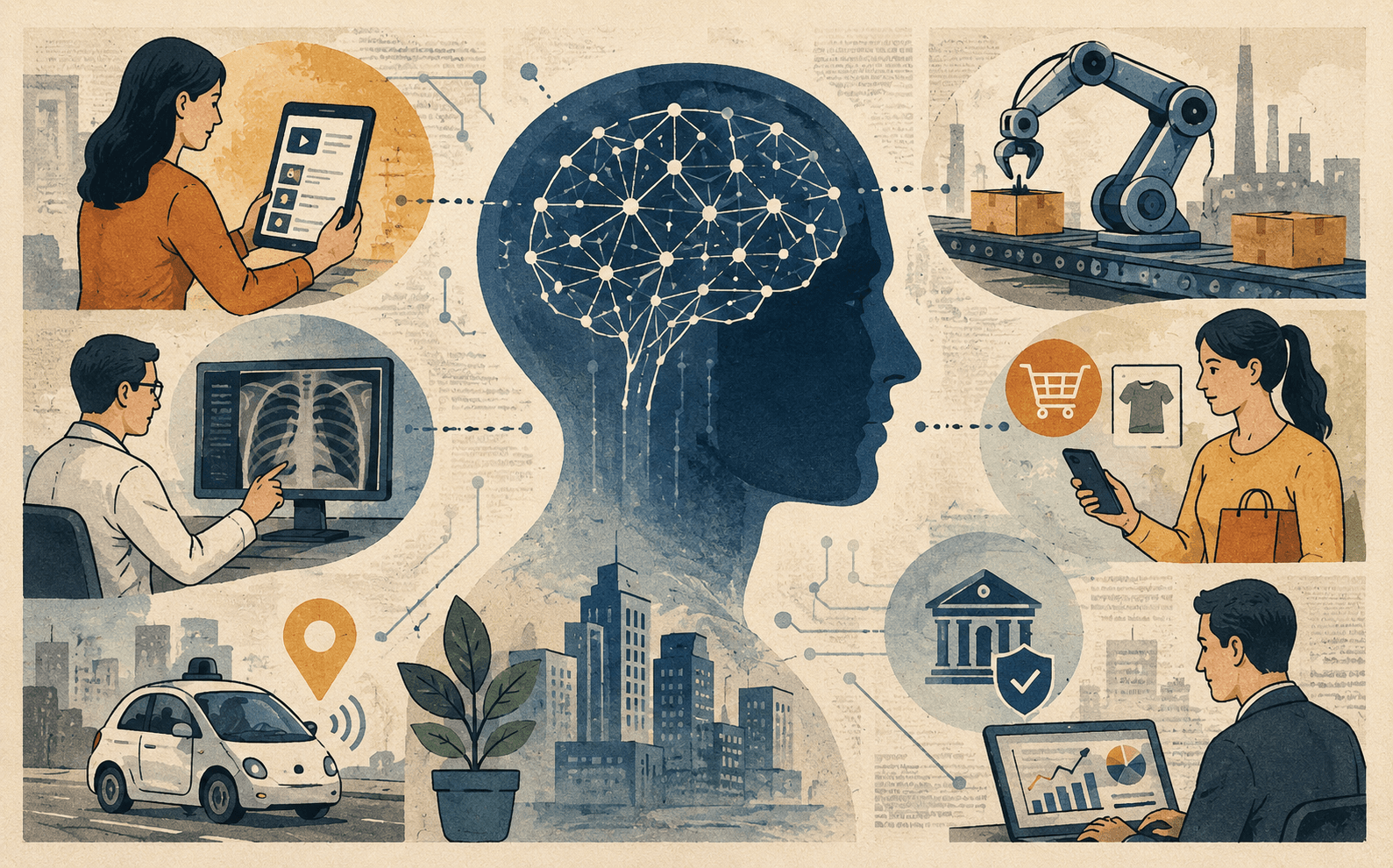
How Machine Learning is Transforming Our Daily Lives?
1. Personalized Entertainment
Streaming platforms like Netflix, YouTube, and Spotify analyze your viewing or listening history to recommend content that matches your interests. Instead of searching through thousands of options, machine learning predicts what you are most likely to enjoy.
Example: If you frequently watch science fiction movies, Netflix will recommend similar films based on your viewing habits and the preferences of users with similar interests.
2. Smarter Healthcare
Machine learning is helping doctors diagnose diseases faster and more accurately. AI powered systems can analyze medical images, detect cancer in its early stages, predict patient risks, and even assist in developing new medicines.
Example: Hospitals use machine learning to analyze X-rays and MRI scans, helping radiologists identify abnormalities that might otherwise be overlooked.
3. Safer Transportation
Modern transportation has become smarter thanks to machine learning. Navigation apps predict traffic conditions, while autonomous vehicles use cameras and sensors to recognize roads, pedestrians and obstacles.
Example: Google Maps suggests the fastest route by analyzing real time traffic data collected from millions of users.
4. Online Shopping
E-commerce companies use machine learning to understand customer preferences and improve shopping experiences. Example: When you browse Amazon, the platform recommends products based on your previous purchases, search history, and browsing behavior, making shopping faster and more personalized.
5. Banking and Financial Security
Banks use machine learning to detect suspicious transactions, reduce fraud, and assess credit risks. Example: If your credit card is suddenly used in another country while you are at home, the system may temporarily block the transaction and notify you immediately.
6. Manufacturing and Engineering
Machine learning is transforming factories into intelligent production systems. Engineers use predictive maintenance to monitor machines and detect problems before equipment fails.
Example: A factory can predict that a motor is likely to fail within the next week by analysing vibration and temperature data, allowing maintenance before a costly breakdown occurs.
Benefits of Machine Learning
Machine learning offers numerous advantages
- Automates repetitive tasks, increasing productivity.
- Improves decision making through accurate data analysis.
- Reduces operational costs.
- Enhances customer experiences through personalization.
- Detects fraud and cyber threats more effectively.
- Supports scientific research and innovation.
- Improves efficiency in industries such as healthcare, agriculture, manufacturing, and education.
Challenges of Machine Learning
Despite its benefits, machine learning also presents challenges.
- Data Privacy: Large amounts of personal data raise concerns about user privacy.
- Bias: Poor quality or biased data can produce unfair decisions.
- Job Transformation: Some routine jobs are becoming automated, requiring workers to learn new skills.
- Security Risks: AI systems can become targets for cyber attacks if not properly protected.
The Future of Machine Learning
Machine learning is still evolving. Future applications may include fully autonomous transportation systems, personalized education tailored to every student's learning style, advanced medical treatments, smart cities, precision agriculture, and intelligent robots working alongside humans.
Rather than replacing people, machine learning is increasingly becoming a tool that enhances human capabilities. It allows professionals to solve complex problems faster, make better decisions, and focus on creativity and innovation.